.png "Disability Rights Center of Kansas")


DRC Newsletter - 2025 Impact and the New Kansas Guardianship Law

A Record Year for Disability Rights Services
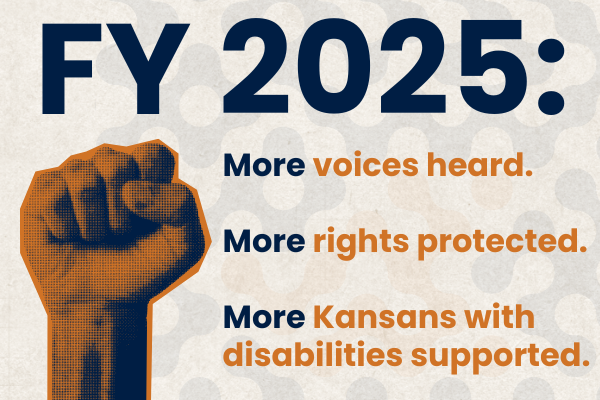
In Federal Fiscal Year (FY) 2025, the Disability Rights Center of Kansas (DRC) broke our historical record for the most services provided in a single year!
 This is an unmistakable sign of both the growing need for disability rights legally-based advocacy services and our increased impact across the state.
As Kansas' designated Protection and Advocacy (P&A) agency, DRC carries a federal mandate established by Congress in 1975 and enshrined in federal law. Our role is clear and urgent: protect people with disabilities from abuse and neglect, challenge illegal discrimination, and safeguard access to healthcare, housing, employment, and education. In FY 2025, our staff of attorneys and advocates delivered on that mandate at a historic scale.
Why This Matters
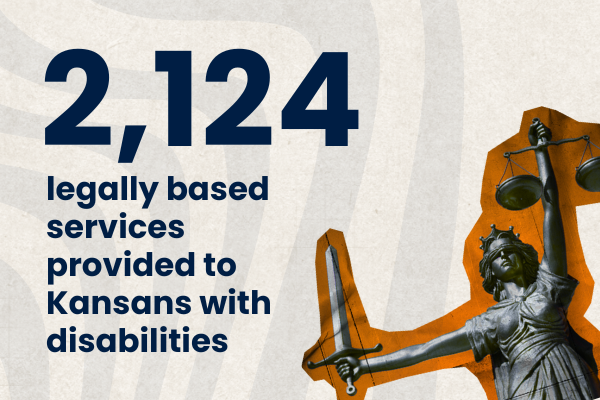
DRC provided 2,124 legally based services, including full legal representation, through our P&A and Disability & Aging Crime Victims Unit (DACVU) programs. Record-setting service numbers reflect the community's trust and the value of DRC’s disability-rights, legal safety net, which more Kansans with disabilities rely on than ever before. DRC has 8 attorneys on staff who practice law and serve Kansans with disabilities. Unfortunately, due to limited resources, we cannot provide litigation services to every person with a disability who contacts us. However, we also set a new record for the number of litigation cases we served in 2025.
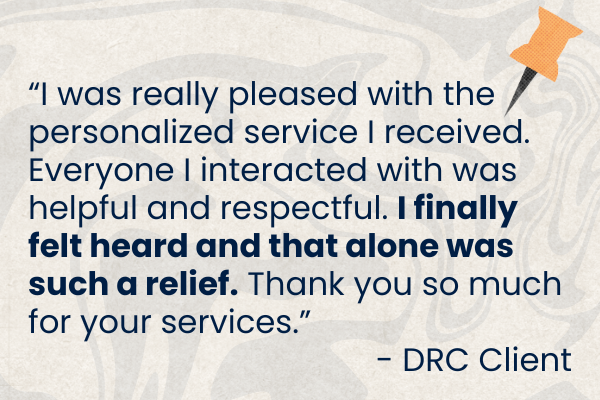
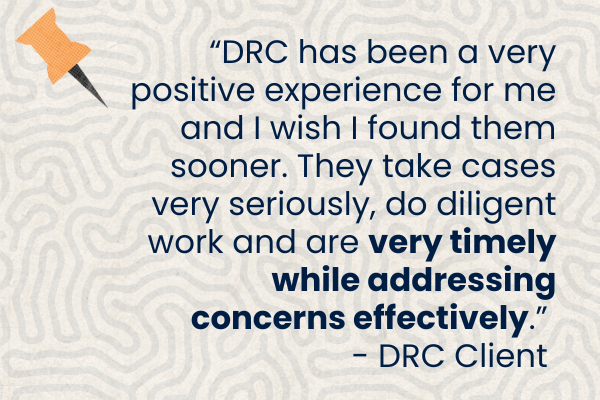
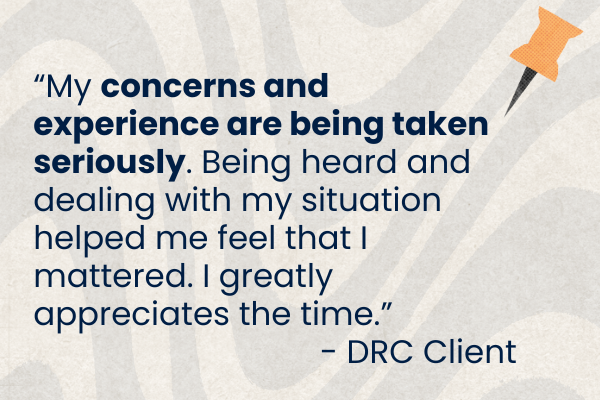
What DRC Clients Had to Say
Where Our Work Made a Difference
Our advocates and attorneys provided legally-based services across the issue areas identified as priorities by the Kansas disability community. This year, we received 726 responses to our public input survey, helping us decide where to focus our limited resources. Thank YOU for your feedback and for helping shape our work.
Here's how services were distributed this year:
- 35% | Crime Victims served through the Disability & Aging Crime Victims Unit (DACVU) & clients served by the Kansas Bar Foundation's Interest on Lawyers Trust Account (IOLTA) Program funding
- 13% | Employment
- 11% | Community-Based Services & Healthcare
- 11% | Fair Housing
- 7% | Community Integration
- 7% | Special Education
- 7% | Accessibility
- 6% | Accountability of Guardians & Other Legal Decision Makers
- 4% | Abuse, Neglect, & Exploitation
DRC is here to help! Our attorneys and advocates provide free advocacy and legal services for Kansans with disabilities, including Kansans with disabilities who have been the victims of a crime. We also serve Kansas seniors who have been the victims of a crime.
Contact us Monday through Friday from 8 a.m. to 5 p.m. by calling our toll-free number (877) 776-1541, by emailing us (info@drckansas.org), or contact us anytime through our online help form at drckansas.org/get-help.
_________________________________________________________
Bringing Disability Rights Center Stage

For the seventh year, Center Stage Theatre Camp brought together actors with Intellectual/Developmental Disabilities (I/DD) for a week of creativity, connection, and empowerment. Annie Wasinger founded the camp in Hays as a high school student. Annie is now a Wichita State graduate and a member of DRC's staff. Annie returned this year to lead 33 actors in developing both performance and self-advocacy skills. 2025 marked a significant milestone for the theater camp, as it integrated disability rights history and advocacy information into its programming for the first time. DRC was proud to support Annie and the camp this year, helping to strengthen its reach and impact.
The week culminated in a community performance attended by more than 250 community members. Two comedic scenes opened the show, followed by a powerful narrated tribute to the Disability Rights Movement, honoring the 60th anniversary of the publication of Christmas in Purgatory and the 50th anniversary of the Developmental Disabilities Assistance and Bill of Rights Act of 1975.

Christmas in Purgatory is a photo essay that was published by Burton Blatt and Fred Kaplan in 1966. In 1965, Blatt and Kaplan secretly documented life inside institutions for people with I/DD, capturing images that showed widespread neglect and abuse. The photo essay played a key role in informing the public and accelerating both the Disability Rights Movement and the push away from institutionalization for people with I/DD. "One of our leading actors, Ryan, became misty-eyed every time he performed as Burton Blatt, realizing that just sixty years ago his determination to simply see the most neglected and abused of our community served as a catalyst for the Disability Rights Movement," Annie said, "I hope our cast members and audience walked away understanding the importance of the Protection and Advocacy System and the power of truly seeing someone for who they are."
Education extended beyond the stage. Through DRC's support, all the actors, support staff, and audience members received resource folders containing information on disability rights history, DRC programs, voter registration, advocacy tools, and more.
According to Annie, including disability rights history in the performance "meant so much" to the cast, particularly moments that highlighted how individual courage helped launch a movement. The collaboration between the camp and DRC allowed both participants and attendees to learn about the history of the disability rights movement, including the history of the P&A system, its purpose, power, and how it can help.
__________________________________________________________
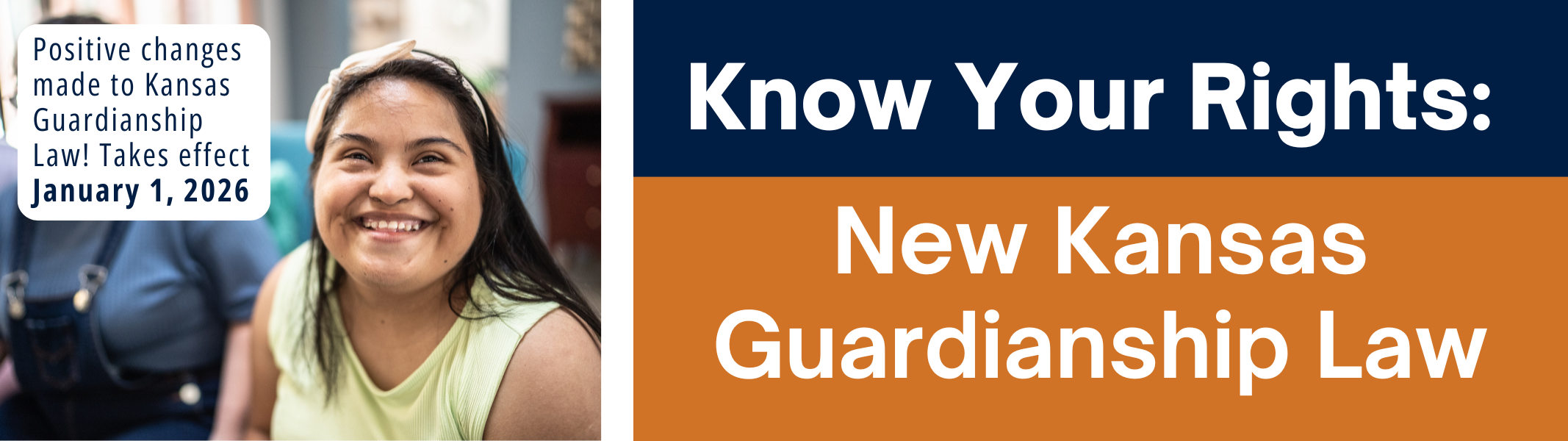
Top 5 Changes You Should Know About the New Kansas Guardianship Law
(Take Effect January 1, 2026)
Kansas has made positive updates to it's guardianship law! The new law gives people with disabilities more rights, more control, and more choices. Learn about the top 5 changes below.
1. Every Guardianship Must Have a "Guardianship Plan"
If the court finds someone is in need of a guardian, their guardianship MUST have an individualized "guardianship plan." The plan clearly says what the guardian can and cannot do. The plan helps appropriately limit the decision-making powers a guardian has over the person with a disability.
If you have a prior guardianship that was established before Jan. 1, 2026, you can ask the court to approve a guardianship plan. Contact DRC for help!
2. Guardians Must Consider What the Person Under the Guardianship Wants
The new rule is that guardians must use "substitute decision-making" instead of the "best interest" standard. This means the guardian must consider what the person under the guardianship wants, not just what the guardian thinks is "best."
This change applies to both new and existing guardianships created before Jan. 1, 2026.
3. Guardianship Is a Last Resort
Courts must first consider alternatives to guardianship, like:
- - Supported decision-making: having people you trust help you with decisions
- - Power of attorney: allowing someone you trust to legally help you with financial and/or health care decisions
- - Limited guardianship: where you only need a guardian for a short period of time or for certain services
These options let the person with the disability keep more control over their own lives.
4. Stronger Protections
End of Life - the new law fixes a fatal flaw in the guardian's end-of-life powers under the prior guardianship law. Under the prior law, guardians had powers to stop life-sustaining care (like medical treatment, food, or water) too easily. The new law limits the guardian's power to stop life-sustaining care and applies to all guardianships, even those established prior to Jan. 1, 2026).
Grievances - The new law also allows for anyone to file a grievance (complaint) if a guardian isn't following the law, the guardianship plan, or even if they believe the guardian limits too many of the person's rights. Courts will review the grievance and fix problems when needed.
These new protections apply for all guardianships, established before or after the effective date of the law (Jan. 1, 2026).
5. The Law Is "Person-Centered"
The new law requires that people under guardianship get clear written notice of their rights. They must be involved in decision-making. The new law also embraces a person-centered approach. In addition to the positive, person-centered changes noted above, the new law uses person-centered terminology like "individual subject to guardianship" instead of the prior terms of "ward" or "incapacitated person."
The law moves Kansas toward a more person-centered system—one that respects choice, dignity, and independence.
Download the PDF flyer version of this information here
Download the PDF of DRC's full 20-page guide to the new law here
__________________________________________________________

DRC is Here to Help
DRC has attorneys and advocates who provide free advocacy and legal services for disability rights. We help with many different disability rights issues. Additionally, our Disability & Aging Crime Victims Unit (DACVU) helps both Kansans with disabilities and Kansas seniors who have been victims of crime. Need assistance? Contact us today.
Get Help
_________________________________________________________

More Resources
Have you visited the Resource Center on DRC's website? The Resource Center has lots of information and tools to advocate for your disability rights. There is information on topics like Assistive Technology, Special Education, Employment, Alternatives to Guardianship, Social Security, and more.
Check Out the Resource Center
_________________________________________________________
Zealously advocating for the disability rights of Kansans to protect their full participation as citizens.
Want to support DRC's mission? Help us spread the word about our free services to Kansans with disabilities! Consider forwarding this email to your professional network, family, or friends. Ask them to subscribe as well!
Finally, please consider donating to DRC. DRC is a 501(c)(3) non-profit organization, and your donation is tax-deductible. Donate here.
Happy Holidays!