.png "Disability Rights Center of Kansas")


Protecting Yourself from Financial Exploitation by Friends or Family
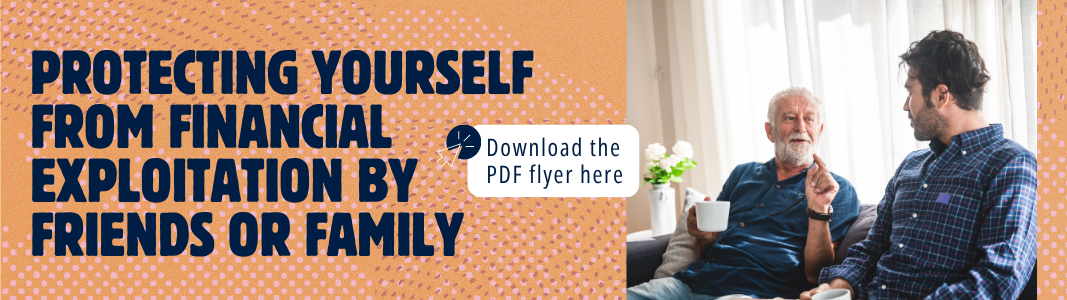
Friends and family are among the most important people in our lives. They often offer support, share in our joys, and help us through difficult times. However, financial exploitation can happen even in relationships with people we love. A friend or family member may financially exploit a person with a disability or an older adult. The exploitation may be intentional, or the person may not understand that what they are doing is wrong.
The person may promise to repay you. The person may promise to stop using your money. But the behavior may continue because it can be difficult to confront or report someone you love, trust, or depend on. You may want to help them because you care about them, but make sure you aren’t hurting yourself in the process.
Financial exploitation can happen informally, such as when someone repeatedly borrows money and does not repay it. It can also involve misuse of legal authority, such as a person under a power of attorney using your money for their own benefit.
The following are possible signs of financial exploitation by a loved one and steps you can take to protect yourself.
Possible Signs that a Friend or Family Member is Financially Exploiting You
- Asking you for a large amount of money or frequently asking for smaller amounts.
- Pressuring you to sign documents quickly, especially powers of attorney, contracts, loan documents, or changes to a will or beneficiaries.
- Becoming unusually controlling, insisting on being present during financial conversations, or isolating you from people you trust.
- Using guilt, trust, fear, or urgency to pressure you to provide cash, cards, passwords, or access to your accounts.
- Taking control of your mail, online banking, benefits, or financial records.
- Threatening to take away care, companionship, housing, or transportation unless you provide money or property.
- Pressuring you to change ownership of your home, vehicle, or other valuable property “for convenience” or “to help” you.
Possible Signs that a Guardian, Conservator, or Power of Attorney is Misusing their Authority:
- Sudden or unexplained bank withdrawals, frequent ATM use, or transfers the person cannot explain.
- New names added to your bank accounts, bank signature cards, property deeds, or beneficiary lists without your knowledge or a clear reason.
- Unpaid bills, utilities shut off, or lack of basic necessities when there should be enough money to pay for them.
- Missing checks, debit or credit cards, bank statements, identification documents, or other financial records.
- Forged signatures, unusual credit card charges, new accounts, or debts you did not knowingly take on.
- Confusion, fear, secrecy, or reluctance to discuss money around a particular friend, family member, or caregiver.
Ways to Protect Yourself from Financial Exploitation:
- Keep bank statements, checkbooks, cards, passwords, and legal documents in a secure place.
- Review your accounts regularly. Consider setting up alerts for large withdrawals or unusual transactions.
- Use a trusted contact for financial accounts when available and choose that person carefully.
- Read documents fully before signing them.
- For major decisions, consider getting independent legal or financial advice.
- Do not give someone broad access to your money unless it is necessary and clearly documented.
- Be cautious about adding someone to a joint bank account, deed, or vehicle title.
- Stay connected with more than one person you trust. This can reduce isolation and help you identify problems sooner.
- Assign a second person to act as co-guardian/conservator/power of attorney.
- Pause if someone pressures you to:
- keep financial decisions secret;
- act immediately; or
- give them private access to your money or property.
What to Do if You Believe You Have Been Financially Exploited:
- Do not blame yourself or be ashamed of seeking help.
- Report suspicious activity to your bank or financial institution as soon as possible. Ask what it can do to protect your accounts, replace cards, change passwords, or stop transactions.
- Report suspected abuse, neglect, or financial exploitation to Kansas Adult Protective Services by calling the Kansas Protection Report Center at 1-800-922-5330.
- If you believe a crime may have occurred, contact your local law enforcement agency.
- Contact the Disability Rights Center of Kansas for information about your rights and available assistance.
This grant project is supported by subgrant number 26-VOCA-56 awarded through the Federal Office for Victims of Crime as administered by the Kansas Governor’s Grants Program. The opinions, findings, conclusions, or recommendations expressed in this publication, program, or exhibition are those of the author(s) and do not necessarily reflect the views of the Office of the Kansas Governor or the U.S. Department of Justice.