.png "Disability Rights Center of Kansas")


Disability Rights in Fair Housing
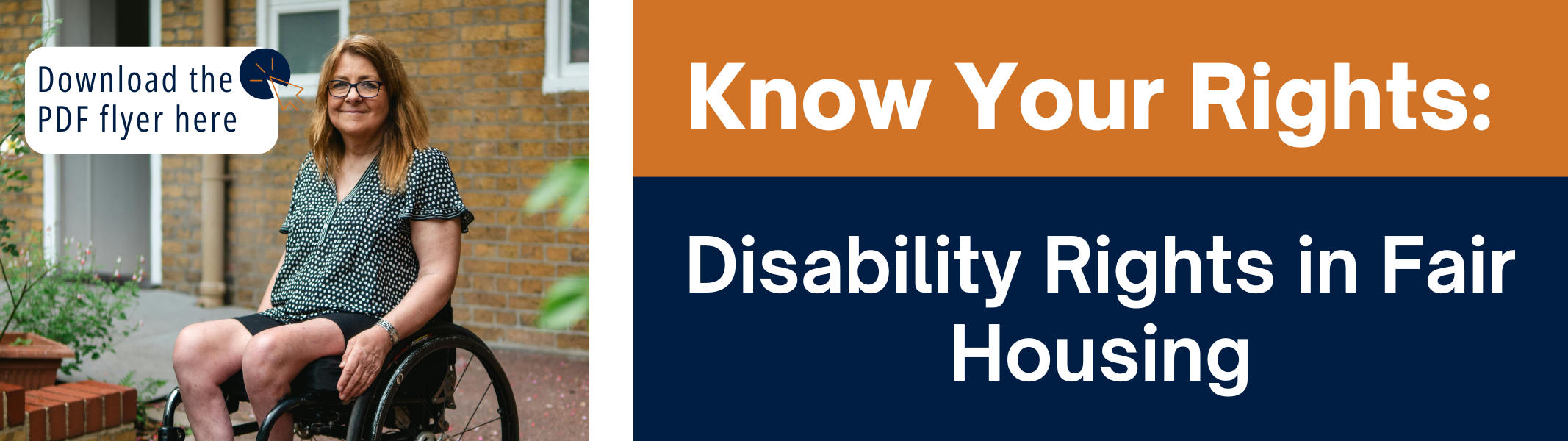
PDF - Fair Housing and Your Rights As a Person with a Disability: Fair Housing Act (FHA) Explainer
PDF - Everything You Wanted to Know about Fair Housing Rights (full 6-page guide)
Fair Housing and Your Rights as a Person with a Disability
Fair Housing Act (FHA) Explainer
At a Glance: People with disabilities have specific rights to find and keep safe, accessible housing. The Fair Housing Act protects you from discrimination because of your disability and gives you the right to ask for reasonable accommodations. If someone violates those rights, you can file a complaint for help.
What is the Fair Housing Act?
The Fair Housing Act (FHA) is a federal law that protects people from discrimination in housing. It was first passed in 1968 and expanded in 1988 to include additional protections for people with disabilities.
Under the FHA, people with disabilities have the right to look for, rent, or buy housing, and to live in their homes, without being treated unfairly because of their disability.
What Counts as Disability Discrimination in Housing?
Disability discrimination under the Fair Housing Act includes:
- - Refusing reasonable changes (modifications) to the home - like adding grab bars or a ramp when the tenant pays for it
- - Refusing reasonable rule changes (accommodations) - like allowing a service or emotional support animal in a "no pets" property
- - Not designing new multifamily housing to be accessible - like making doors wide enough for wheelchairs or bathroom walls strong enough for grab bars
What Is a Reasonable Accommodation in Housing?
A reasonable accommodation is a change that helps you live safely and comfortably in your home as a person with a disability.
Examples of reasonable accommodations in housing:
- - Getting your lease or notices in large print
- - Asking for an assigned accessible parking space
When a home modification is granted, you will usually pay for it. As with anything, who pays for it is negotiable. The owner of a rental property is not required to make any modifications at their own expense, but they cannot refuse reasonable requests or prevent you from making needed changes. Owners of federally subsidized housing, however, may be required to pay for the modification. Examples of federally subsidized housing are public housing, project-based Section 8, and Farmers Home Administration-subsidized housing. The Housing Choice Voucher program is not a federally subsidized program under the Fair Housing Act.
How Do I Ask for an Accommodation or Modification?
Ask your landlord or property manager for what you need as soon as possible. You can ask verbally, but it's best to make the request in writing and keep a copy of your records.
Your letter should include:
- What change you are asking for
- Why you need it (you don't have to share detailed medical information beyond what is necessary to show the need)
Your landlord may ask for a note from a doctor or personal care provider to confirm the need for the accommodation.
What If My Rights Are Violated?
If you believe you've been discriminated against in housing because of your disability, you can file a complaint with either:
- - The Kansas Human Rights Commission (KHRC), or
- - The U.S. Department of Housing and Urban Development (HUD).
The forms to file complaints to both agencies can be found on their websites. Often, both agencies can be faster and more impactful than simply trying to go to court.
The deadline to file a complaint with KHRC or HUD is one year after the most recent act of discrimination. If the problem is ongoing, like a landlord continuing to deny an accommodation, the one-year clock restarts with each new act.
Want to learn more? View DRC's full 6-page guide about Fair Housing rights here.